
I remember a wedding in a drafty manor house last autumn—the kind where the light dies at 4:00 PM and the heating is purely decorative. I was trying to capture a quiet moment between the bride and her father, but instead, I was being hovered over by a Great Aunt who had decided my lens was “too intrusive” and that I should move three feet to the left, then two feet to the right, while simultaneously complaining about the lukewarm Prosecco. It’s in those high-tension, low-light moments that you realize the technical side of the job is the easy part; the real work is figuring out how to deal with a difficult guest at an event without losing your professional cool or, more importantly, your shot.
I’m not going to give you a lecture on “conflict resolution” or some sanitized corporate manual that assumes everyone is acting in good faith. You won’t find any fluff here about “maintaining a positive mindset” while someone is actively ruining your frame. Instead, I want to talk about the logistics of ego. I’m going to share the specific, slightly unglamorous tactics I use to redirect attention, manage physical space, and protect the workflow when a guest decides to become a permanent, uninvited part of the composition.
Its Not the Lighting Its the Chaos How to Deal With a Difficult Guest at an
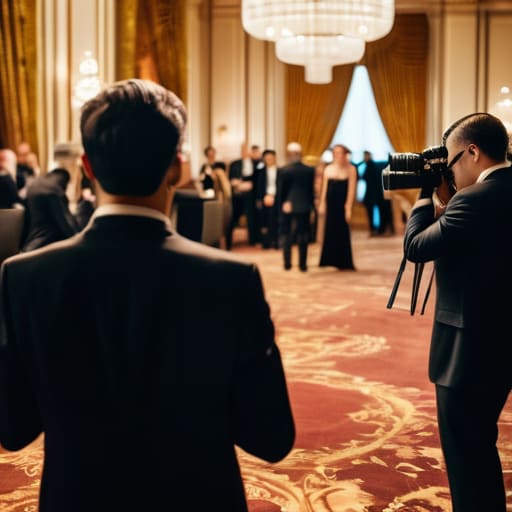
When I’m shooting a wedding or a high-stakes corporate gala, I’m not just looking for the light; I’m scanning the room for the energy shift. You can have the most perfect Rembrandt lighting setup, but it won’t save the shot if a guest is making a scene three feet away from your subject. Most people think my job is about aperture, but half the time, it’s about managing disruptive event attendees without making a scene myself. I’ve learned that you can’t fix a personality with a better lens, so you have to manage the perimeter.
If someone is getting loud or crossing lines, don’t try to be the hero or the mediator. My approach to handling intoxicated guests gracefully is to stay invisible. If I see a situation brewing, I don’t step in to lecture them—I pivot my client. I’ll gently guide the person I’m photographing toward a quieter corner or a different angle, effectively using the physical space to create a buffer. It’s not about formal conflict resolution; it’s about setting social boundaries through movement and redirection before the chaos ruins the frame.
The Unseen Friction Mastering Conflict Resolution at Social Gatherings

When I’m shooting a wedding or a high-stakes corporate mixer, I’m not just watching the frame; I’m watching the room. You start to notice the tension before the shouting even begins—the way a guest leans too heavily into a conversation or the subtle, aggressive posture of someone who has had one too many. My advice is to treat these moments like a lighting adjustment: don’t make a scene, just pivot. Effective conflict resolution at social gatherings isn’t about being a hero; it’s about being a ghost. If you see a situation brewing, you don’t march in with a lecture. You find a way to subtly shift the energy, perhaps by engaging a different group or moving your gear to a less volatile corner.
If you are the one tasked with the actual heavy lifting, you have to master handling intoxicated guests gracefully. It’s a delicate dance. You aren’t there to play policeman, but you can’t let them ruin the atmosphere for everyone else. I’ve learned that the best approach is a quiet, private redirection—never call someone out in front of the crowd. If you lose the room’s respect by being too blunt, you’ve lost the shoot.
When the Room Turns Sour Managing Disruptive Event Attendees

There is a specific kind of tension that happens when a room shifts from “lively” to “volatile.” You feel it in the air before you see it—a sudden spike in volume, a jagged edge to the laughter, or that heavy, awkward silence when someone says something they shouldn’t. When you are there to document the event, your instinct is to shrink, to become invisible, but you can’t ignore the shift. Managing disruptive event attendees isn’t about being a security guard; it’s about recognizing the moment the social contract breaks.
If you find yourself caught in the crossfire, the goal is to move toward de-escalation techniques for hosts rather than adding to the noise. If a guest is becoming a problem, don’t engage in a power struggle in front of the lens. I’ve learned that the best approach is often a quiet, lateral move—redirecting the energy or offering a subtle exit strategy for the person causing the friction. It’s about maintaining your professional composure while the room feels like it’s tilting. You aren’t there to fix the party, but you are there to ensure the disruption doesn’t become the only thing worth capturing.
Quiet Diplomacy Effective De Escalation Techniques for Hosts
When things start to fray at the edges, your instinct is to fix it loudly. Don’t. I’ve learned from watching frantic wedding coordinators that the moment you raise your voice to “control” the room, you’ve already lost the room. Effective de-escalation techniques for hosts aren’t about authority; they’re about lowering the temperature. If a guest is getting loud or making others uncomfortable, pull them aside—away from the center of the floor and the lens of any cameras. It’s much harder for someone to maintain a scene when you’ve physically moved them into a quiet corner.
The goal is to provide an out that doesn’t feel like an eviction. I always suggest a “soft pivot.” Instead of telling someone they are being disruptive, try offering a way to reset. If you’re handling intoxicated guests gracefully, it looks less like a reprimand and more like a suggestion: “I think we’ve had enough of this particular energy for one night; let’s grab some water in the lounge.” You aren’t fighting them; you’re simply renegotiating the space before the friction becomes a fire.
Polite Deflection Setting Social Boundaries for Guests Without Ruining the
There is a specific kind of tension that happens when a guest starts pushing a boundary—maybe they’re being too loud, or they’ve decided your personal space is public property. In my experience, the goal isn’t to shut them down like a bouncer, but to pivot. I’ve learned that setting social boundaries for guests works best when you frame the redirection as a way to help them or the flow of the evening. Instead of saying “you’re being too much,” try “I’d love to chat more about this, but I need to make sure I catch the next group before they head out.” It’s a soft exit that keeps your dignity intact without making a scene.
When things lean toward the more difficult side, like handling intoxicated guests gracefully, you have to rely on the “broken record” technique. Pick a polite, firm phrase and stick to it. If they won’t take the hint, don’t get drawn into a debate about why they should stop; that’s how you lose control of the room. The trick is to remain the calmest person in the circle. If you stay steady, the chaos usually loses its momentum.
Grace Under Pressure Handling Intoxicated Guests and Professional Event Eti
When the champagne starts flowing a little too freely, the energy in the room shifts, and suddenly you aren’t just managing a schedule—you’re managing a liability. I’ve been in rooms where a guest has crossed the line from “spirited” to “problematic,” and the instinct is to freeze or get defensive. But handling intoxicated guests gracefully isn’t about being a bouncer; it’s about being a ghost. You want to intervene so quietly that the rest of the party doesn’t even realize a correction has been made. If you make a scene, you’ve just created a new center of gravity for the chaos to orbit around.
The key to professional event etiquette in these moments is the soft pivot. Instead of telling someone they’ve had too much—which is a guaranteed way to trigger an argument—you offer a way out that preserves their dignity. Suggesting a change of scenery, a glass of water, or a quiet corner to “catch their breath” is a subtle form of de-escalation techniques for hosts that works far better than a direct confrontation. You aren’t policing their behavior; you’re simply managing the environment to keep the evening from unraveling.
The Survival Kit: 5 Real-World Tactics for When the Vibe Breaks
- Read the room before you read the guest. I’ve learned that most “difficult” people are just reacting to a sensory overload—too much noise, too much heat, or a room layout that makes them feel cornered. Before you jump into damage control, check the environment. Sometimes moving a person five feet away from a booming speaker or into a slightly cooler corner does more for their temperament than any polite conversation ever could.
- The “Side-Bar” Strategy. Never call someone out in front of the group; it’s the fastest way to turn a minor annoyance into a full-blown scene. If a guest is becoming a problem, catch their eye and suggest a change of scenery. “I’d love to hear more about that, let’s step over here where it’s quieter.” It’s a way to remove the audience they’re performing for without making them feel like they’re being sent to the principal’s office.
- Master the art of the polite pivot. When a guest is being abrasive or pushing boundaries, don’t engage with the content of their argument. If you fight the logic, you’re stuck in the mud with them. Instead, acknowledge and redirect. “I hear you, and that’s an interesting take. Speaking of [Topic B], have you tried the catering?” It’s not about winning; it’s about refusing to let their friction become your friction.
- Know your exit ramp. As the person in charge, you cannot afford to get sucked into a one-on-one debate. I always keep a “task” in my back pocket—a quick check with the caterer, a glance at the schedule, or a need to check a light fixture. It gives you a professional excuse to physically detach from a draining interaction without it feeling like a personal snub.
- Trust your gut, not your ego. If a guest feels “off” from the moment they walk in, don’t try to prove to yourself that you can handle them. You don’t need to win a battle of wits with a disruptive attendee to prove you’re a professional. If the situation is escalating, stop trying to “fix” the person and start focusing on protecting the rest of the event. Sometimes the most professional move is a swift, quiet intervention that prioritizes the many over the one.
The Real Work Happens in the Margins
“You can have the most expensive lighting rig and the sharpest glass in the world, but they won’t save you from a room that’s lost its rhythm; dealing with a difficult guest isn’t about being a security guard, it’s about being the person who notices the tension in the air before it breaks the frame.”
Iwona Krawczyk
The Final Frame
At the end of the day, managing a difficult guest is a lot like managing a difficult shoot: you can’t control the variables, only your reaction to them. Whether it’s a guest who has had one too many drinks or someone who simply refuses to respect the social boundaries of the room, the goal is always the same—to protect the integrity of the event without turning a minor hiccup into a public spectacle. We’ve talked about de-escalation, the art of the polite deflection, and knowing when to step in before the atmosphere turns sour. It’s about recognizing that most friction isn’t personal; it’s just a breakdown in the environment, and your job is to re-stabilize the room before the moment is lost.
When the lights go down and the guests finally head home, don’t spend your evening obsessing over the one person who made things difficult. Even in my best portraits, there’s always a stray shadow or a moment where the subject’s energy just drops, and you have to work twice as hard to find the light again. Events are the same. Focus on the people who are there to celebrate, the ones who are contributing to the energy you worked so hard to create. The chaos is inevitable, but it doesn’t have to be the story. Learn the lesson, pack up your gear, and remember that the next event is a fresh start.
