
I remember a corporate shoot three years ago where the client insisted on a “heroic” angle, but the photographer—some kid fresh out of a workshop—kept shooting from waist height. By the time I stepped in, the CEO looked less like a visionary leader and more like a giant with a massive, looming chin. It’s the same mistake I see everywhere: people think they can solve every compositional problem with a fancy new lens or a software fix, but they completely ignore the physics of the person standing in front of them. If you’re struggling with how to shoot a portrait from below without distortion, stop looking at your gear settings and start looking at the actual geometry of the room.
I’m not here to give you a lecture on the mathematical properties of focal lengths that you could find in a textbook. Instead, I’m going to tell you exactly where to place your feet, how to tilt your chin (and theirs), and why distance is your best friend when the angle gets tricky. This is about the messy, practical reality of getting the shot when the client is impatient and the lighting is garbage.
The Unavoidable Low Angle When the Room Forces Your Hand

Sometimes, you don’t get to choose. You’re in a cramped studio with a client who wants to look “powerful,” or you’re shooting a corporate headshot in a lobby where the only decent light is coming from a high window, and suddenly, you’re stuck shooting from the hip. You aren’t sitting there by choice; the architecture is bullying you. When you’re forced into this position, the instinct is to panic and start tilting the camera upward, but that’s a trap. If you rely too heavily on camera tilt adjustment to compensate for the height, you’re just going to end up with a subject whose forehead looks three miles wide and whose chin is disappearing into their neck.
Instead of fighting the floor, focus on your camera positioning for subjects. If you have to stay low, don’t just aim the lens up at their face like a weapon. Try to keep the sensor plane as parallel to their body as possible. If you can, step back just a little more than you think you need to. It gives you more breathing room to manage the geometry of the shot before the perspective starts warping their features into something unrecognizable.
How to Shoot a Portrait From Below Without Distortion

First, let’s talk about the gear, because this is where most people trip up. If you’re using a wide-angle lens to capture a sense of scale, you’re asking for trouble. Wide glass is a liar; it stretches everything at the edges, making noses look massive and chins look like they’re receding into the neck. When I’m dealing with a tight space, I try to lean on a longer lens focal length for portraits—something in the 85mm to 105mm range—to keep the geometry honest. If you absolutely must go wide, you have to be surgical about your camera positioning for subjects. Don’t just point the lens up at their face; keep the sensor as parallel to their plane as possible.
Even with the right lens, your physical posture matters more than your settings. If you tilt the camera upward too aggressively, you aren’t just getting a low angle; you’re creating a caricature. Instead of a heavy-handed camera tilt adjustment, try lowering your entire body. Get on one knee or even sit on a stool. By lowering your eye level rather than just angling the lens, you maintain a more natural perspective while still getting that heroic, upward-looking feel. It’s about controlling the geometry, not just pointing and shooting.
Fighting the Lens Choosing the Right Lens Focal Length for Portraits
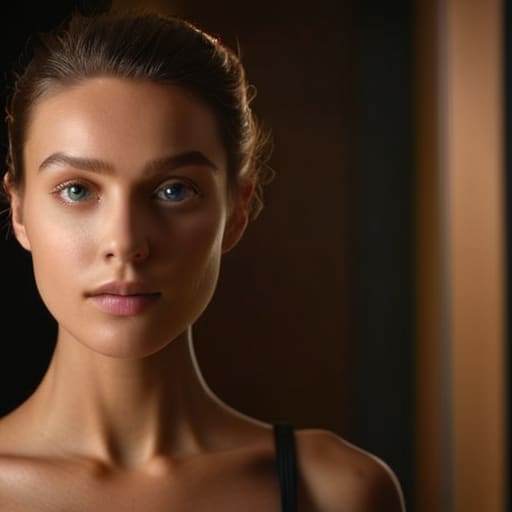
If you’re standing in a cramped studio or a narrow hallway and you’re forced into a low angle, your first instinct might be to grab whatever wide-angle lens is lying on the table. Don’t. That’s how you end up with a client who looks like they’ve been through a funhouse mirror. When you’re fighting to keep the proportions sane, the lens focal length for portraits becomes your most important tool for avoiding facial distortion.
I always tell my assistants to lean on a 50mm or an 85mm if the space allows. A wider lens—anything under 35mm—is going to exaggerate the distance between the nose and the ears the second you tilt that camera up. You’ll get a massive forehead and a chin that looks like it’s receding into the next room. If you absolutely have to use a wider lens because the client is standing three feet away from a wall, you need to compensate by staying as level as possible. It’s a constant tug-of-war between your camera positioning for subjects and the physics of the glass, but finding that sweet spot where the features stay compressed is what separates a professional shot from a mistake.
The Subtle Art of Camera Tilt Adjustment and Subject Placement
If you’ve already picked your lens and you’re standing in a cramped corner, you’re going to have to get clever with your body. Most people think a low angle means pointing the camera straight up at the chin, but that is a one-way ticket to making your subject look like a villain in a bad horror movie. Instead, try to keep the sensor as parallel to the subject’s face as possible. Even if you’re crouching, a slight camera tilt adjustment—tilting the top of the camera slightly toward you rather than aiming the lens up their nostrils—can save the shot. It’s about finding that sweet spot where you get the height you want without the geometry turning their nose into a mountain.
Once you’ve managed your angle, look at where they are standing in relation to you. If you’re shooting from below, don’t let them stand dead center and square to the lens; it makes the distortion feel aggressive. Ask them to turn their shoulders slightly away or tilt their head just a fraction. This simple bit of camera positioning for subjects breaks up the vertical lines that a low angle tends to exaggerate. It’s less about the gear and more about managing the space between your eye and their chin.
Avoiding Facial Distortion When the Subject Feels Exposed
When you’re shooting from a lower vantage point, you aren’t just fighting physics; you’re fighting the subject’s sudden, crushing insecurity. The second they see themselves on the monitor—nose looking twice as large or chin looking nonexistent—they’ll decide they “just don’t photograph well.” Once that happens, the shoot is effectively dead. You can have the most expensive lighting in the world, but if they’ve lost their confidence, you’re just photographing a statue.
To prevent this, you have to be proactive about avoiding facial distortion before they even notice it. I’ve learned that instead of waiting for the “oh no” moment, I use a bit of subtle camera positioning for subjects to bridge the gap. If you can’t get the camera lower due to a physical obstruction, don’t just tilt the lens up aggressively. Instead, have them lean their torso slightly toward you or tilt their chin down just a fraction. It’s a tiny adjustment, but it compensates for the perspective shift and keeps their features looking human rather than caricatured.
Mastering Camera Positioning for Subjects Who Think They Photograph Badly
When a subject decides they “photograph badly,” they usually mean they feel vulnerable, and a low angle is the fastest way to make them feel like they’re under a microscope. If you’re forced into a low angle perspective because of a cramped studio or a specific architectural need, you can’t just go full-on hero shot and hope for the best. That’s how you end up with a client who looks like they’re looming over you in a way that feels aggressive rather than empowering.
Instead, you have to use camera positioning for subjects as a psychological tool. I’ve found that if I can get them to lean slightly toward the lens—just an inch or two—it helps bridge that gap and keeps the chin from looking disconnected. It’s a tiny tweak, but it’s the difference between a portrait that feels intentional and one that feels like a mistake. If they’re still spiraling, stop worrying about the technicalities of avoiding facial distortion for a second and just move the tripod. Sometimes, moving the camera just six inches to the left or right changes the way the light hits their eyes, and suddenly, they stop fighting you and start trusting the frame.
Five Ways to Stop the Floor from Eating Your Subject
- Watch your focal length like a hawk; if you’re trying to do a low angle with a 24mm lens while standing too close, you aren’t taking a portrait, you’re creating a caricature with a forehead the size of a billboard.
- Stop fighting the tilt and start using the subject’s chin; instead of tilting the whole camera up like a novice, try keeping the sensor relatively level and asking them to lean slightly toward you to close that awkward gap.
- Mind the distance between the lens and the nose; even with a “good” lens, if you’re crouched right in their personal space at a low angle, you’re going to magnify every bump and pore in a way that makes them want to cancel the shoot.
- Use your modifiers to fill the shadows; shooting from below means you’re looking up into the nostrils and under the brow, so if you don’t have a reflector or a softbox positioned to bounce light back up into those hollows, you’re just documenting shadows.
- Check your vertical lines before you commit; if you’re shooting low to get that “heroic” look, make sure you haven’t accidentally tilted the camera so far that the walls behind them look like they’re collapsing inward.
The Geometry of a Bad Shot
If you’re shooting from below and the subject starts looking like a caricature, don’t blame the glass; you’ve probably just cornered them with a wide lens and a bad angle. Back up three feet, tighten your focal length, and remember that a low angle should feel like a choice, not a mistake forced by a cramped studio floor.
Iwona Krawczyk
The Bottom Line
At the end of the day, shooting from a low angle isn’t about some grand artistic statement; it’s usually about the fact that you’re stuck in a cramped corner or trying to find a bit of heroics in a subject who feels small. Just remember that you can’t outrun physics with a fancy preset. You have to manage the focal length, keep a respectful distance to stop the nose from expanding, and use a slight tilt to keep the perspective from turning into a caricature. If you find yourself fighting the gear, stop. Back up, check your angle, and remember that the lens is just a tool, not a magic wand that can fix poor positioning.
Don’t let a difficult room or a stubborn chin make you lose your nerve. Most of the time, when a shot feels “off,” it isn’t because you lack talent—it’s because you haven’t accounted for the space you’re standing in. Once you stop blaming the camera and start looking at the geometry of the room, you’ll find that even the most awkward low-angle shot can become something intentional and powerful. Go out there, find your light, and trust your eyes more than your settings. The best portraits happen when you stop fighting the environment and start working with it.
