
I once spent forty minutes trying to coordinate a lighting setup for a legacy family session, only to realize the grandmother was terrified of the strobe flash and the toddler had decided the studio floor was the only acceptable place to nap. You can own every piece of glass from Leica to Zeiss, but if you’re obsessing over your aperture while a seven-year-old is melting down, you aren’t actually doing photography. Most tutorials will tell you that learning how to shoot a portrait of two generations is about finding the perfect focal length or mastering complex lighting ratios, but they are lying to you. The real work happens in the unpredictable gaps between the poses, managing the friction between a person who wants dignity and a child who just wants a snack.
I’m not here to give you a lecture on the physics of light or a gear checklist. Instead, I want to talk about the messy, unglamorous reality of managing different temperaments and competing energies in a single frame. I’ll be sharing the specific ways I handle the physical space, the way I talk to subjects to stop them from fidgeting, and why a single softbox is often better than a five-light nightmare when you’re dealing with a family.
Understanding How to Shoot a Portrait of Two Generations

Before you even touch the shutter, you have to accept that you aren’t just managing people; you’re managing different speeds of existence. A toddler operates on a three-second attention span, while a grandparent might be fighting a stiff neck or a sudden bout of self-consciousness. If you try to force a rigid, formal structure, you’ll end up with a portrait that looks like a hostage negotiation. Instead, think about capturing family legacy through portraits by leaning into the natural friction between them. The goal isn’t a perfect line of faces; it’s finding the point where their different energies actually touch.
When I’m setting up, I’m looking for the physical connection points. It’s rarely about the big, sweeping poses you see in textbooks. It’s about the way a small hand rests on a weathered knee, or how a grandmother leans in to hear a whisper. I find that composition for multi-age groups works best when you stop trying to make everyone look at the lens at the same time. If you chase the perfect eye contact from everyone simultaneously, you’ll spend the whole session chasing your tail. Let them interact, and the shot will follow.
Key Things to Know
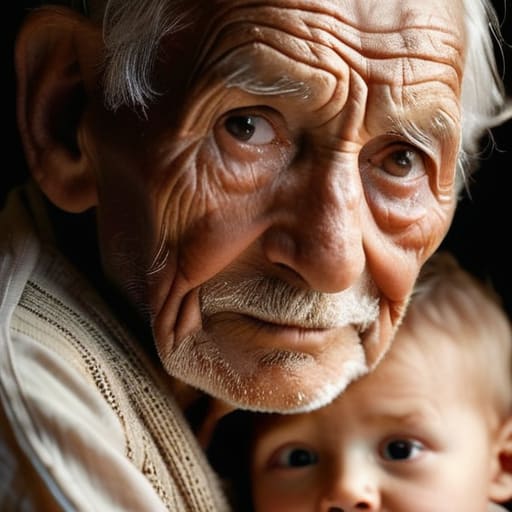
First, let’s talk about the light. When you have a toddler and an eighty-year-old in the same frame, you aren’t just managing shadows; you are managing skin textures and wildly different attention spans. I usually lean toward a single large octa through a scrim—something soft enough to wrap around a child’s face without blowing out their highlights, but directional enough to give the grandparent some shape so they don’t look like a flat wash of beige. Lighting for multi-generational shoots is less about technical perfection and more about finding a middle ground where nobody looks washed out or overly harsh.
Then there is the physical reality of the gap between them. You can’t just tell them to “stand together.” You have to bridge the height difference. I often find myself suggesting specific intergenerational photography posing ideas, like having the grandchild sit on a stool while the grandparent stands behind, or even better, getting them both on the floor. If you don’t give them something to do with their hands—and I mean actually something, like holding a shared object or a hand—they will default to that stiff, “school photo” posture that kills the mood instantly.
Practical Tips and Steps

First, let’s talk about the light. If you’re working in a living room, forget about trying to fight the overhead yellow glow; it’ll make everyone look tired and washed out. I usually aim for a single large window and a single softbox placed about 45 degrees to the side to create some depth. When you’re figuring out lighting for multi-generational shoots, the goal isn’t perfection, it’s consistency. You want the light to fall softly on the child’s face without blowing out the skin tones of the grandparent, who might have more texture to work with.
When it comes to the actual setup, stop trying to force a “perfect” pose. If you tell a grandmother to sit perfectly upright while a toddler is vibrating with energy, you’ve already lost. Instead, look for intergenerational photography posing ideas that feel organic—like the child leaning against a knee or the grandparent holding a small hand. I find that composition for multi-age groups works best when you vary the heights. Don’t line them up like a school photo; get one person slightly lower or use a stool to create a visual triangle. It keeps the eye moving and feels much more like a real moment.
Common Mistakes to Avoid
The biggest mistake I see is trying to force a “perfect” studio pose on people who are clearly vibrating with nervous energy. If you try to pin a toddler and a grandfather into a rigid, symmetrical composition, you’re going to end up with a photo that looks like a hostage negotiation. You can have the most expensive lighting setup in the world, but if you aren’t prioritizing emotional storytelling in family photography, you’re just taking a very expensive picture of people looking uncomfortable. Stop fighting the natural movement; if the child reaches for the grandparent’s hand, let it happen.
Another trap is getting so obsessed with the technicalities of lighting for multi-generational shoots that you forget to watch the eyes. I’ve seen photographers spend twenty minutes tweaking a softbox to get the perfect catchlight in the adult’s eyes, only to realize the grandchild has drifted into a shadow or is looking at a stray dust mote. Don’t get caught in the gear loop. If you’re too busy adjusting your tripod to notice the fleeting moment of connection between them, you’ve already lost the shot.
Final Thoughts
At the end of the day, you aren’t just managing focal lengths or worrying about whether the light is hitting the grandmother’s eyes just right. You are managing a living, breathing ecosystem of personalities. Most of the heavy lifting in these sessions isn’t technical; it’s about holding space for the chaos. If the toddler is melting down or the patriarch is suddenly feeling self-conscious about his posture, don’t fight it. Lean into the mess. Sometimes the most honest version of capturing family legacy through portraits happens in the quiet, unscripted moment right after you thought you were finished.
Don’t get precious about your shot list. If you spend the whole hour chasing a perfect, symmetrical composition for multi-age groups, you’ll miss the actual soul of the session. My advice? Keep your kit simple, keep your eye on the hands (always the hands), and remember that the goal isn’t a museum piece—it’s a memory. If you can walk away knowing you captured a genuine connection rather than just a well-lit arrangement of people, then you’ve actually done your job.
Five things that will actually save your shoot
- Stop trying to make them look at the lens. If you have a toddler and a grandmother, the second they both stare at the camera at the same time is a miracle, not a plan. Aim for the interaction between them instead; the connection is usually more honest than the pose.
- Watch your focal length like a hawk. If you’re too close with a wide lens, you’ll distort the elder’s features in a way that feels unflattering, and if you’re too far, you’ll lose the intimacy. I usually stick to an 85mm and physically move my body to find the right compression.
- Manage the physical gap. Grandparents often want to hold the child, but if the child is squirming, that hand placement becomes a wrestling match. Sometimes, having them sit on the same bench—close enough to touch, but far enough to breathe—is the only way to keep the composition from turning into a heap of limbs.
- Check the light for skin textures. A harsh, direct light might look “crisp” on a professional, but it’s unkind to the fine lines of an older subject and the unpredictable sheen of a child’s skin. I prefer a large octa box positioned slightly off-axis to keep the shadows soft and the skin looking human.
- Be the conductor of the energy. The moment the child gets bored or the grandparent gets stiff, the shoot is dying. You have to be ready to pivot from “perfect lighting” to “capturing the chaos” in about three seconds. If they start laughing because things are going wrong, stay in that moment.
The Real Variable
You can spend three hours obsessing over your lighting ratio or whether a 50mm is too wide for the room, but none of that matters if you haven’t accounted for the fact that the toddler is about to meltdown and the grandmother is terrified of her own chin. In multi-generational work, you aren’t just managing light; you’re managing a tiny, unpredictable ecosystem.
Iwona Krawczyk
One Last Thing Before You Pack the Gear
At the end of the day, a multi-generational shoot is less about mastering your strobe settings and more about managing the unpredictable energy in the room. You can have your lighting ratios perfect and your focal length dialed in, but if you haven’t accounted for the toddler’s attention span or the grandfather’s discomfort with the studio lights, the shot will feel hollow. Remember to prioritize the connection over the technical perfection. Watch the hands, keep an eye on the light as the sun shifts through the window, and don’t be afraid to scrap your original plan if the family starts interacting in a way that feels more honest. The best moments usually happen in the messy gaps between your planned poses.
When you finally sit down to look through your images, don’t just look for the ones where everyone is smiling perfectly at the lens. Look for the ones where the tension has broken—the shot where the grandmother is looking at the child instead of the camera, or where the shared laughter looks a bit unpolished. That is where the real portrait lives. Photography is often a battle against chaos, but if you can embrace the friction of the moment, you’ll end up with something that actually lasts longer than a digital file. Now, go find out what they do with their hands and get to work.