
I once spent forty minutes trying to explain “jawline definition” to a CEO who was convinced he looked like a melting candle. I was talking about lighting angles and chin placement, but he wasn’t listening because he couldn’t see the problem. He was trapped in his own head, spiraling into a mental loop of every bad photo he’d ever taken. This is where most photographers fail: we try to use verbal instructions to fix a visual crisis. If you want to stop the frantic “just tilt your head slightly left” dance, you need to learn how to use a mirror to show a subject the pose instead of just describing it.
I’m not going to give you a lecture on the psychology of self-image or suggest you buy a high-end, lighted vanity. This is about the practicality of the studio floor. I want to show you exactly when to grab a hand mirror, how to position it so they don’t get distracted by their own hair, and how to use that moment to rebuild their confidence. We’re going to talk about the unfiltered reality of using a mirror to bridge the gap between what you see through the viewfinder and what they see in their mind.
Its Not the Lens Its Their Lack of Body Language Awareness
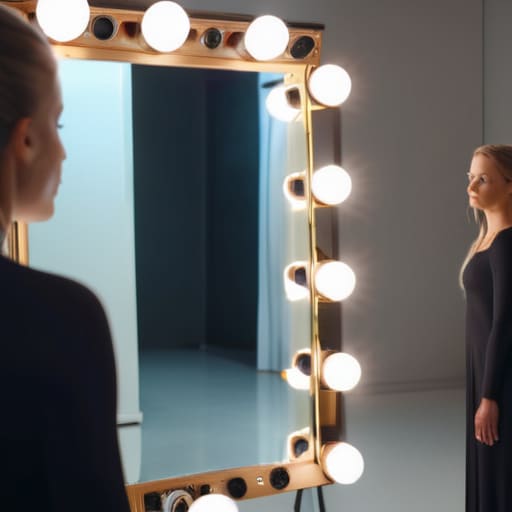
Most people walk into a studio thinking they know how to stand, but the second the lights hit them, they lose all sense of their own silhouette. They aren’t being difficult; they just have zero body language awareness when they’re under the pressure of a lens. They’ll hunch their shoulders, tilt their chin in a way that creates a double chin, or suddenly decide their arms belong in a weird, stiff position by their sides. You can tell them “relax your shoulders” a thousand times, but verbal cues often get lost in the noise of their own anxiety.
This is where the mirror becomes your best tool for building model confidence. Instead of me shouting directions from behind the tripod—which can feel a bit like being critiqued by a judge—I let them see the reality. When I use a mirror as a form of visual feedback for models, the shift is instant. They stop listening to my voice and start listening to their own eyes. They see that the “awkward” slouch they feel is actually a minor adjustment away from looking composed, and suddenly, they aren’t fighting me anymore; they’re working with me.
The Mirror Trick How to Use a Mirror to Show a Subject the Pose
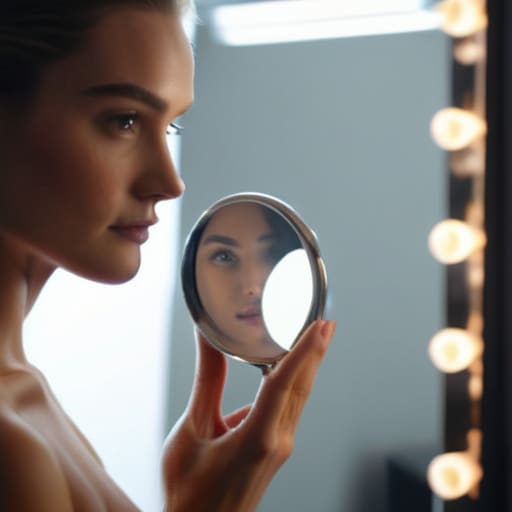
Don’t just hold the mirror up and hope for the best. If you just shove a reflective surface in front of someone, they’ll likely panic and start over-correcting, which leads to that stiff, “deer in the headlights” look we’re trying to avoid. Instead, use it as a way of building model confidence by treating it like a collaborative tool. I usually grab a medium-sized hand mirror—something light enough that it doesn’t feel like a threat—and I position myself so we’re both looking at the reflection together. It turns the session from a critique into a shared observation.
When I’m working on a corporate headshot and the subject is fighting their own shoulders, I’ll use mirror demonstration methods to show them exactly where the tension is sitting. I might say, “Look at how your chin is dropping here,” and let them see the silhouette for themselves. Providing this kind of visual feedback for models isn’t about pointing out flaws; it’s about giving them the agency to fix their own posture. Once they realize they can control the image, they stop fighting me and start working with me.
Giving Them Visual Feedback for Models Who Feel Lost
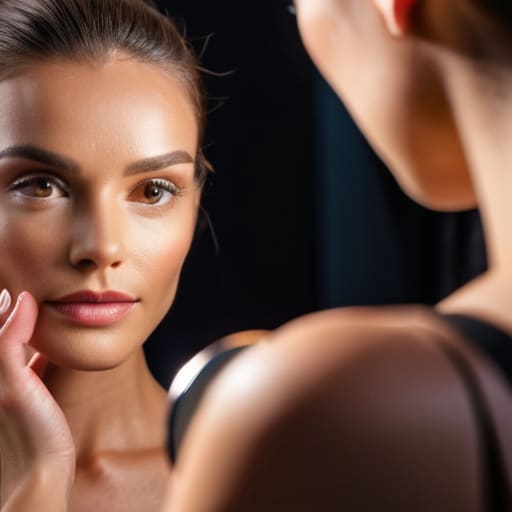
When you’re working with someone who has zero experience, they aren’t just “posing”—they are performing a version of themselves that usually feels incredibly fake. They’ll tilt their chin too far or hunch their shoulders because they’re trying to act like a model. This is where providing direct visual feedback for models becomes a survival tool rather than a luxury. Instead of me shouting “shoulders down” from ten feet away while I hide behind a tripod, I walk over with the mirror. I show them the exact angle where their jawline looks sharp versus where they look like they’re bracing for an impact.
It’s less about teaching them “correct” beauty standards and more about building model confidence through reality. When they see that a slight shift in their weight actually makes them look relaxed rather than stiff, the panic starts to subside. I find that improving posture through reflection works best when you treat the mirror as a collaborative tool. You aren’t correcting a mistake; you’re helping them find the version of themselves that actually feels comfortable in the light.
Improving Posture Through Reflection Without the Unnecessary Criticism
There is a very thin line between being a helpful director and being a jerk. If you stand there and say, “Your shoulders are too high” or “You’re slouching,” you’ve already lost them. The moment you start critiquing their body like it’s a broken piece of equipment, they’ll tense up, and that tension is impossible to photograph. Instead of pointing out the flaws, use the mirror as a neutral third party. When I want to work on improving posture through reflection, I don’t tell them they look slumped; I just hold the mirror up and say, “Check out how much more presence you have when you drop your shoulders just an inch.”
It’s about shifting the focus from what they are doing wrong to what they can control. By using the mirror as a tool for building model confidence, you turn the session into a collaborative experiment rather than a lecture. Let them see the subtle difference between a stiff, defensive neck and a relaxed, elongated one. Once they see the visual proof that a small adjustment makes them look more powerful, they stop fighting you and start working with you.
Mastering Mirror Demonstration Methods for Better Photography Posing Techni
Don’t just hand them the mirror and walk away; that’s how you end up with a subject staring at their own pores for ten minutes instead of actually working. You need to be intentional about your mirror demonstration methods. If you’re trying to fix a slouch, don’t say, “You look stiff.” Instead, hold the mirror at their eye level, find the angle where they look most composed, and say, “See how much more presence you have when you drop your shoulders just like that?” You’re essentially acting as a translator between what they feel and what the lens sees.
The goal here is building model confidence through actual evidence, not just empty compliments. When you use the mirror to show them a specific tilt of the chin or a way to rest their hands, you’re giving them a tangible reference point. It stops being about your “artistic vision” and starts being a collaborative adjustment. It’s much easier for a client to buy into a pose when they can see the physicality of the shift themselves. Once they realize they aren’t actually as awkward as they feel, the tension in the room usually just evaporates.
Beyond the Glass Building Model Confidence in the Messy Middle
The mirror is just a tool, not a magic wand. You can show someone exactly where their chin is dropping or how their shoulders are creeping up toward their ears, but if they still feel like they’re being scrutinized under a microscope, the session is dead in the water. Once you’ve used those mirror demonstration methods to correct the physical alignment, you have to pivot immediately back to the person, not the reflection. If they spend the next ten minutes staring at their own flaws in the glass, you’ve lost the connection.
The real work happens in the “messy middle”—that awkward gap between the initial setup and the moment they finally relax. This is where building model confidence becomes more important than any technical adjustment. I always try to pair a correction with a genuine observation. If I use the mirror to help them with improving posture through reflection, I follow it up by saying, “There, that’s the light hitting your eyes perfectly,” or “That angle feels much more natural.” You aren’t just fixing a pose; you’re managing their internal monologue.
Five ways to use the glass without making it weird
- Don’t just hand them the mirror and walk away. If you do, they’ll spend three minutes obsessing over a stray hair or a pore and completely lose the energy we were building. Stand near them, look at the mirror together, and narrate what they’re seeing so they stay focused on the pose, not their flaws.
- Use the mirror to fix the “invisible” stuff. Most people don’t realize their chin is tucked or their shoulders are up by their ears until they see it in real-time. Instead of saying “fix your posture,” which is useless advice, point to the mirror and say, “See how that tilt in your neck opens up your face? Keep that.”
- Watch their hands in the reflection. This is my go-to move. When they ask what to do with their hands, have them look in the mirror while they move them. It helps them realize that a hand resting on a hip looks intentional, while a hand hovering near the neck looks like they’re having a panic attack.
- Keep the mirror small and handheld if you can. A massive, heavy studio mirror feels like a piece of equipment they have to manage. A small, lightweight hand mirror feels like a tool for them to play with, which lowers the stakes and makes the whole process feel less like a critique and more like a collaboration.
- Use it as a “reset” button when the session stalls. If the energy in the room turns sour because the subject has decided they “look terrible,” stop the shooting. Grab the mirror, find one thing that actually looks great—a specific angle or a way the light hits their eyes—and show them. It’s much harder to argue with your own reflection than with my opinion.
The Gap Between Feeling and Looking
Most of the time, a subject isn’t failing the pose; they’re just failing to understand the gap between how they feel in their head and how they actually look in the light. A mirror isn’t a tool for correction—it’s a bridge to close that gap so they can finally stop fighting the camera and start working with it.
Iwona Krawczyk
The Bottom Line
At the end of the day, the mirror isn’t some high-tech piece of gear you need to obsess over; it’s just a tool to bridge the gap between what you see through the viewfinder and what they feel in their own skin. Whether you’re using it to fix a slumped shoulder, show them how a specific chin tilt catches the light, or simply to stop that downward spiral of self-doubt, the goal is the same: clarity. Remember that you aren’t just correcting a pose; you are translating a visual language that they don’t speak yet. Use the reflection to replace guesswork with certainty, and you’ll find the session moves much faster and with far less friction.
Photography is often sold as this magical, effortless dance with light, but we both know it’s actually about managing the messy, human variables in the room. When you use a mirror to guide someone, you’re showing them that you are on their team, working together to solve the puzzle of the frame. Don’t be afraid to look a little unpolished or grab a handheld mirror mid-shoot to get the job done. Once they realize they can actually control how they show up, the tension breaks, and that’s when you finally get the shot you actually came for.
