
I once spent forty-five minutes in a fluorescent-lit purgatory in Frankfurt, sweating through my linen shirt while a customs officer poked at my lens caps as if they were contraband. Everyone tells you that you need some expensive, gold-stamped ATA Carnet or a PhD in international trade law to survive the border, but that’s mostly nonsense designed to scare you. The truth about how to travel with gear through customs isn’t found in a thick manual of maritime regulations; it’s found in the frantic, sweaty reality of standing at a checkpoint with a heavy Pelican case and a mounting sense of dread.
I’m not here to give you a lecture on global logistics or sell you on a premium insurance package you don’t need. Instead, I’m going to give you the practical, unvarnished version of how I actually get my kits from A to B without losing my mind—or my sensor. We’ll talk about the specific paperwork that actually matters, the way you should pack to avoid unnecessary “inspections,” and how to handle the person behind the desk when they decide your tripod looks suspicious. This is about surviving the friction so you can actually get to the shoot.
The Gear the Border and the Chaos How to Travel With Gear Through Customs
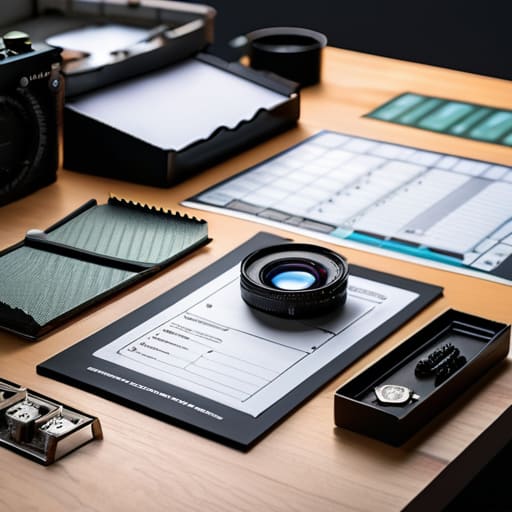
The first thing you need to accept is that a customs officer doesn’t care about your creative vision; they care about tax evasion. If you show up with three camera bodies, a bag of lenses, and a lighting kit without a paper trail, you aren’t a professional—you’re a suspicious person with expensive toys. This is where most people trip up. You cannot rely on “trust me, I’m a photographer.” You need a rock-solid list of serial numbers for gear inventory tucked into your bag. If you can’t match the number on the bottom of your Sony A7R to the line on your sheet, you’re going to have a very long, very loud conversation in a windowless room.
If you’re moving between countries frequently for commissions, stop trying to wing it with just a basic declaration. You should be looking into an ATA Carnet for professional equipment. It’s essentially a passport for your gear that proves you aren’t planning on selling that modifier or lens set in a local market. It feels like a massive administrative headache when you’re filling it out at your kitchen table, but it is the only real way of avoiding equipment seizure at borders when things get complicated. It’s better to spend the afternoon on paperwork than the next three days in an airport terminal waiting for a supervisor.
Serial Numbers and Paperwork the Invisible Weight of Gear Inventory
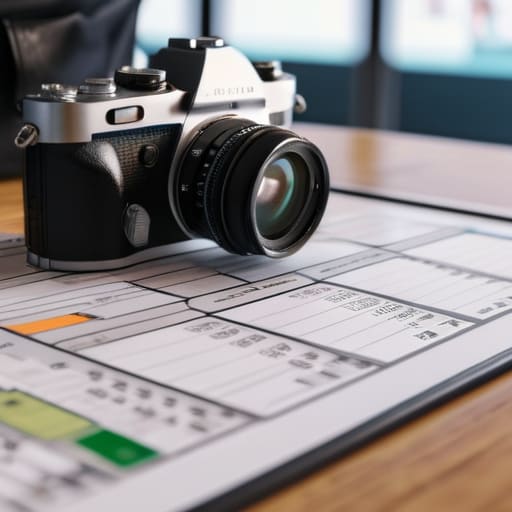
I learned the hard way that a spreadsheet is just as vital as a lens kit. There is nothing quite like the cold sweat of a border agent asking for the specific serial numbers for gear inventory while you’re standing in a queue of a hundred impatient travelers. If your list is vague—if you just write “Sony camera” instead of the exact model and its unique ID—you are essentially inviting them to doubt you. I keep a master document, updated every time I buy or swap a body, because vague descriptions are an invitation for trouble.
When you’re moving across borders for a serious commission, you can’t just wing it with a standard customs declaration forms for electronics. If the job is big enough, you need to look into an ATA Carnet for professional equipment. It feels like an unnecessary layer of bureaucracy until you’re staring down a customs officer who thinks you’re planning to sell your kit in their country. It’s that extra bit of paperwork that acts as your passport for your gear, ensuring you aren’t stuck paying ridiculous duties just for the crime of bringing your own tools to work.
The Ata Carnet for Professional Equipment Your Passport to Peace
If you’re heading into a shoot in a country that isn’t particularly fond of “unaccounted-for” electronics, you need to stop thinking like a tourist and start thinking like a logistics manager. This is where the ATA Carnet for professional equipment becomes your best friend. Think of it as a golden ticket that tells customs officers, “I’m not here to sell this kit; I’m just here to use it and then take it home.” Without it, you’re essentially gambling with every lens and body in your bag, hoping a bored official doesn’t decide your tripod looks like something worth taxing.
It’s an extra layer of bureaucracy, yes, but it is the most reliable way of avoiding equipment seizure at borders. When you have that little passport for your gear, you aren’t stuck in a frantic debate over whether your lighting kit counts as commercial imports. It turns a potential three-hour interrogation into a simple stamp-and-go. It’s a bit of upfront paperwork and a bit of a headache to organize, but when you’re standing in a terminal at 4:00 AM with a heavy Pelican case, you will be incredibly glad you did it.
Importing Temporary Goods Customs Avoiding the Bureaucratic Trap
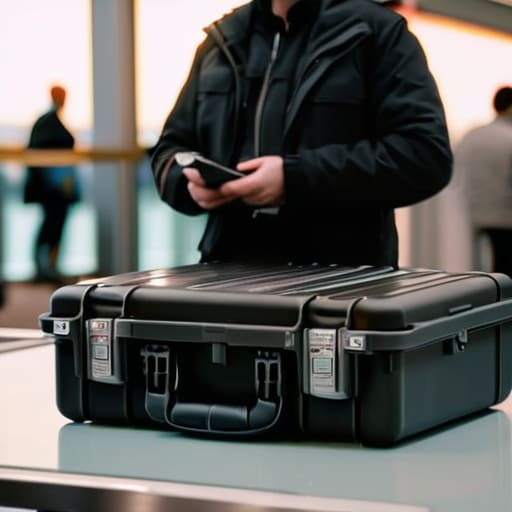
The real nightmare isn’t just the paperwork; it’s the moment a customs officer looks at your Pelican case, looks at you, and decides you aren’t a photographer, but a smuggler of high-end electronics. If you’re just passing through, you aren’t “buying” anything, but you are technically importing temporary goods customs will want to track. If you don’t make it clear that your lenses are coming right back home with you, you’re inviting a conversation about import duties that nobody has the energy for at 6:00 AM.
I’ve learned the hard way that being vague is a death sentence. When you’re filling out those inevitable customs declaration forms for electronics, don’t just write “camera gear.” Be specific, even if it feels tedious. If you can’t prove the intent is professional use and temporary stay, you’re looking at avoiding equipment seizure at borders becoming your primary job for the day. It’s much easier to spend an hour being precise with a pen than three days in a windowless room arguing about why you need a 70-200mm lens in a country where you don’t even have a studio booked.
Customs Declaration Forms for Electronics Dont Let Them Seize Your Tools
If you show up at a border with three camera bodies, a bag of lenses, and a lighting kit without having filled out the proper paperwork, you aren’t just a traveler; you’re a potential smuggler in the eyes of a tired customs officer. I once watched a colleague get stuck in a loop for four hours because they tried to breeze through a “nothing to declare” lane with a Pelican case full of cinema glass. They didn’t realize that customs declaration forms for electronics aren’t optional suggestions—they are your shield. If you haven’t explicitly declared that this gear is for professional use and intended to leave the country, you’re essentially inviting them to treat your livelihood like personal imports.
The goal here is avoiding equipment seizure at borders by being aggressively transparent. When you fill out those forms, don’t be vague. Don’t just write “electronics.” Write “Sony A7RIV, Serial #12345.” The more specific you are, the less room there is for an official to decide your gear is something you intend to sell locally. It’s tedious, yes, but it’s much better than the alternative: sitting in a windowless room while they decide whether your kit is worth a massive import tax or a permanent confiscation.
Duty Free Equipment Transport Navigating Customs Clearance for Photographer
The term “duty-free” makes it sound like you’re just picking up a bottle of gin at the airport, but when we talk about duty-free equipment transport, we’re talking about the high-stakes dance of proving you aren’t trying to smuggle a professional cinema kit into the country to sell on the black market. The customs officer doesn’t care that your lens cost more than their car; they only care that you haven’t cleared the right hurdles to prove this gear is coming right back home with you.
If you haven’t sorted your paperwork before landing, you aren’t just looking at a delay; you are looking at the nightmare of avoiding equipment seizure at borders. I’ve seen people lose entire kits because they thought a simple verbal explanation would suffice. You need to be clinical. If you aren’t using an ATA Carnet, your backup plan has to be a mountain of documentation that matches your physical bag exactly. It’s tedious, it’s heavy, and it’s the only way to ensure your tools don’t become permanent residents of a customs warehouse.
Five ways to keep your sanity (and your lenses) at the border
- Print everything. I don’t care how much you trust your iPhone; when you’re standing in a dimly lit customs hall in a country where the Wi-Fi is non-existent, you need a physical, crumpled piece of paper with your serial numbers on it. Digital is a luxury; paper is a lifeline.
- Pack your “emergency kit” in your carry-on, not your checked bag. If the airline decides to lose your suitcase, I want my primary body, my most expensive prime lens, and my memory cards on my person. The camera is rarely the problem, but a lost bag is a career-stopper.
- Label your cases with more than just your name. Use something distinct—a specific color of electrical tape or a rugged, non-descript hard case. If your gear looks like a generic black box, it’s much easier for a customs officer to mistake it for something else, or for a baggage handler to misplace it.
- The “One-Light” Rule for packing. Just because you want to shoot with a full lighting kit doesn’t mean you should pack it all. If you’re traveling light, prioritize the one modifier that actually makes a difference. Every extra kilo is another reason for a customs agent to pull you aside for a “random” inspection.
- Be honest, even when it’s awkward. If they ask if you’re carrying professional equipment, say yes. Trying to pass off a high-end cinema rig as “personal hobby gear” is a fast way to get flagged, searched, and stuck in a bureaucratic loop that will eat up your entire shoot day.
The Reality of the Red Channel
You can spend weeks obsessing over the sensor cleanliness or the perfect prime lens, but none of that matters if you’re stuck in a windowless room in Heathrow because you didn’t realize your tripod wasn’t technically ‘personal effects.’ Customs doesn’t care about your kit’s soul; they care about the serial numbers and the paperwork you were too tired to print.
Iwona Krawczyk
The Last Bit of Luggage
At the end of the day, navigating customs is just another layer of production management. You can have the most expensive sensor on the market, but it won’t do you any good if it’s sitting in a dark room in a warehouse because you skipped the ATA Carnet or forgot to double-check your serial numbers. It comes down to the boring stuff: the spreadsheets, the organized bags, and the unsexy paperwork that keeps your kit from becoming someone else’s property. If you treat your documentation with the same respect you treat your lighting ratios, you’ll find that the border is usually just a minor speed bump rather than a total shutdown.
Once you clear the checkpoint and finally get to the location, I want you to forget about the bureaucracy entirely. The goal of all this frantic organization isn’t to become a logistics expert; it’s to protect your ability to actually do the work. When you finally set up that first light and see the subject settle into the frame, the stress of the airport should be a distant memory. You’ve done the groundwork, the gear is safe, and now you can finally stop worrying about the logistics and start focusing on the light.