
I once spent forty-five minutes trying to negotiate with a group of twenty-two wedding guests who refused to stand anywhere except in the direct, punishing glare of the midday sun. I had the perfect wide-angle lens and a tripod that cost more than my first car, but I was losing the battle because I hadn’t accounted for the fact that nobody listens when there is a breeze blowing through a lace veil or a toddler screaming in the background. Most tutorials will tell you to check your aperture or your focal length, but if you’re wondering how to photograph a large group outdoors without losing your mind, you need to stop looking at your spec sheet and start looking at the shade.
I’m not here to talk about gear or the theoretical physics of light hitting a sensor. I want to talk about the logistical nightmare of managing thirty different personalities while the sun is actively trying to ruin your contrast. In this notebook, I’m giving you the actual, unfiltered tactics I use to command a crowd, find usable light in a chaotic field, and ensure that the person in the back row isn’t squinting into oblivion. This is about the work that happens before you even press the shutter.
Understanding How to Photograph a Large Group Outdoors
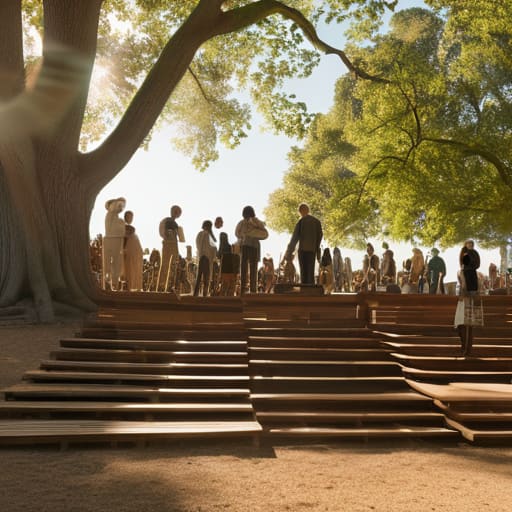
Before you even touch the shutter, you have to accept that you aren’t just a photographer today; you’re a traffic controller. When I’m faced with a crowd of fifty people in a park, my first instinct isn’t to check my aperture, but to look at the ground. Is it level? If the group is standing on a slope, the person in the back row is going to be looking at the sky while the person in the front is staring at your lens. You need to find a flat patch or use tiered posing techniques for big groups—think stools, stairs, or just telling the taller folks to step back—to keep everyone on a similar plane.
Then there is the light, which is rarely your friend when you’re working with a mob. If you’re shooting mid-day, you’ll be fighting to avoid harsh shadows in outdoor photography that make everyone look like they’ve aged ten years in a single frame. I usually look for “open shade”—the edge of a building or a large tree—where the light is even. If you can’t find it, you’ll have to lean heavily on your depth of field for group shots, ensuring you have enough stop to keep the people in the second row from turning into a blur, even if the sun is trying to blow out your highlights.
Key Things to Know
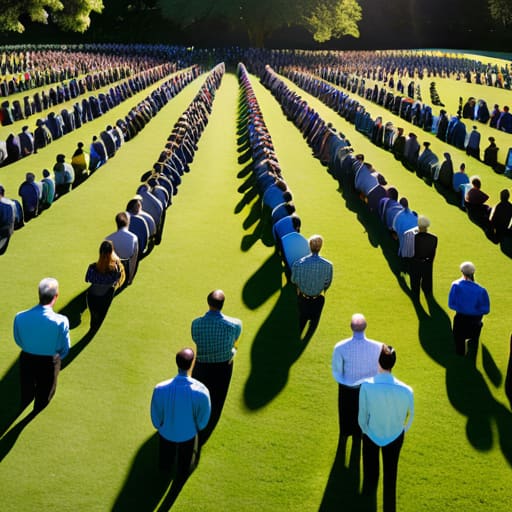
First, let’s talk about the physics of the thing. When you’re dealing with thirty people spread across a lawn, your biggest enemy isn’t the composition; it’s the focus plane. I’ve seen so many photographers get cocky with a wide aperture, only to realize the people in the front row are sharp while the back row looks like they’ve been rubbed with sandpaper. You need to prioritize a deeper depth of field for group shots, even if it means sacrificing that creamy, bokeh-heavy look you practiced in the studio. Stop chasing the f/1.8 dream; if you aren’t at least at f/5.6 or f/8, you’re just gambling with your client’s money.
Then there is the light, which is rarely as cooperative as a controlled strobe. If you’re shooting at midday, you aren’t just fighting the sun; you’re fighting the squinting. Managing natural lighting for portraits in an open field often means finding the edge of a shadow or waiting for a cloud to act as a giant, messy softbox. If you can’t move the people, you have to move your body. Find the angle where the light hits their eyes without turning them into squinting, miserable versions of themselves.
Practical Tips and Steps
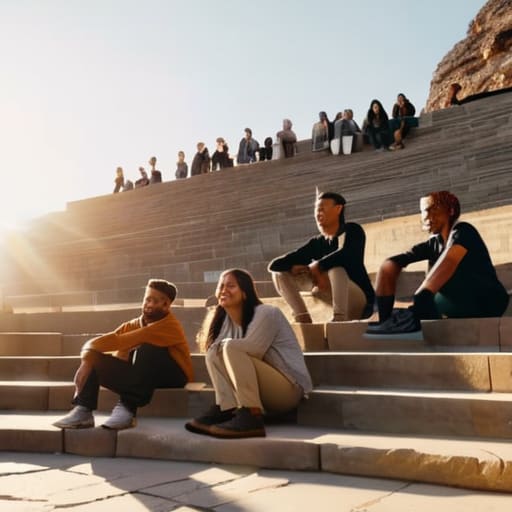
First, stop looking at your viewfinder and start looking at the feet. If you’re dealing with a massive group, you cannot rely on a single row; you need to build a wedge. I usually have people stand on whatever is available—staircases, benches, or even just a slight incline—to create vertical layers. This is where your posing techniques for big groups actually matter. If everyone is on one plane, the people in the back are just heads peeking out from behind shoulders. Aim for a staggered, triangular arrangement so every face has its own pocket of space.
Once you have the shape, you have to deal with the light, which is usually being difficult. If you’re shooting mid-day, don’t fight the sun; find the edge of a shadow. I always look for “open shade”—the soft, even light under a large tree or the side of a building. This is the best way of managing natural lighting for portraits without having to lug a massive scrim into the middle of a field. If you can’t find shade, tell everyone to squint, or better yet, turn them slightly toward the light so they aren’t fighting the glare. Just watch your depth of field for group shots; if you stop down too much, you might get everything in focus, but if you’re too wide, the people on the edges will look like they’re melting.
Common Mistakes to Avoid
The biggest mistake I see is the “safety first” approach to focus. People get nervous about everyone being sharp, so they crank the aperture to f/22, only to realize they’ve accidentally turned the whole group into a muddy, low-contrast mess because of diffraction. You have to find the sweet spot for your depth of field for group shots—usually somewhere around f/5.6 or f/8 depending on your lens—and actually trust your focus points. If you’re too safe with your settings, you lose the texture of the clothes and the catchlights in the eyes, and suddenly the photo looks like it was taken through a veil of steam.
Then there’s the lighting trap. I’ve seen so many photographers try to fight a midday sun by hiding under a tiny patch of shade, only to end up with a group where half the faces are in deep shadow and the other half are squinting into oblivion. Stop trying to “fix” the sun with sheer willpower. Instead of fighting it, focus on managing natural lighting for portraits by moving the entire crowd into a larger, even shade or using a large white reflector to bounce some life back into those shadowed eyes. Don’t let a single bright spot dictate a terrible composition.
Final Thoughts
At the end of the day, you’re going to realize that the most important tool in your bag isn’t a wide-angle lens or a high-speed sync trigger; it’s your ability to keep your cool when the wind picks up and the client starts worrying about the schedule. You can obsess over the perfect depth of field for group shots to ensure the back row is as sharp as the front, but if you haven’t established a rhythm with the crowd, the technical perfection won’t matter. The shot will feel sterile because you were too busy staring at your histogram to notice the energy in the room.
Don’t aim for a masterpiece of mathematical precision. Instead, aim for a photo where people actually look like they belong together. Whether you are managing natural lighting for portraits under a canopy of trees or fighting a midday sun that’s trying to turn everyone into a squinting mess, remember that a little imperfection is better than a perfectly composed shot that feels soulless. Pack up your gear, check that you haven’t left a lens cap in the grass, and go get a coffee. You’ve done the hard part.
Five ways to keep the chaos from ruining the shot
- Scout the shade before you even pack the car. If you turn up to a park and realize the only light is harsh, midday sun hitting everyone’s foreheads, you’re going to spend the whole shoot fighting squinting eyes and dark, cavernous shadows under noses. Find a big tree or a building shadow where the light is even, even if it means moving the group further from their “ideal” spot.
- Stop thinking in rows and start thinking in layers. A flat line of twenty people looks like a school photo from 1994, and it’s a nightmare to manage. Get some people sitting on stools, some on the ground, and some standing. It breaks up the visual weight and makes it much easier to tuck the shorter people into the gaps so everyone actually gets a sliver of light on their face.
- Treat your subject like a conductor, not a photographer. You aren’t just clicking a shutter; you’re managing a crowd. Don’t just yell “smile”; give them something to do. Tell the back row to “lean their weight onto their back foot” or tell the front row to “keep your hands on your knees.” If they have a physical task, they stop looking like deer in headlights.
- Check the edges of your frame for the “uninvited guests.” When you’re squinting through the viewfinder trying to make sure the CEO is smiling, it’s easy to miss the bright red trash can or the stray toddler wandering into the corner of the shot. Do a quick sweep of the periphery before you commit to the burst.
- Bring a way louder voice than you think you need. If you’re trying to give directions in a conversational tone while a breeze is blowing and kids are shrieking, nobody is going to hear you. You have to project. It feels a bit aggressive at first, but I promise, they’d rather you be a little loud and efficient than quiet and struggling to get a single usable frame.
The Myth of the Perfect Shot
You can spend three hours scouting the perfect backlight and obsessing over your aperture, but if you haven’t accounted for the fact that the wind is going to ruin every hairstyle in the group and the sun is going to make half of them squint like they’re in an interrogation, you aren’t actually photographing a group—you’re just documenting a chaotic mess.
Iwona Krawczyk
The Reality of the Shot
At the end of the day, a successful outdoor group shoot isn’t about having the most expensive wide-angle lens or a tripod that costs more than my first car. It’s about the logistics you managed to get right before anyone even looked at the camera. It’s about finding that patch of open shade before the sun moves, managing the chaos of twenty people trying to find their footing, and realizing that your biggest enemy is usually the wind or a sudden change in light. If you’ve scouted the location, communicated the dress code, and kept a firm grip on the timing, you’ve already won half the battle. The technical stuff—the aperture, the shutter speed, the focus—is just the final layer of a much larger, much more messy puzzle.
Don’t let the scale of a large group intimidate you. When you’re standing there with a crowd of fifty people staring back, it’s easy to feel like you’ve lost control, but remember that you are the one with the vision. Even when the light is harsh or the subjects are fidgeting, look for the genuine connection in the middle of the chaos. Sometimes the best shot isn’t the perfectly posed, symmetrical line of faces, but the moment where the tension breaks and everyone actually looks like they belong together. Trust your prep, trust your eyes, and just keep shooting.
