
I once spent three hours in a client’s sun-drenched loft, sweating through my shirt and staring at a light meter that seemed to be mocking me. I had the most expensive modifiers money could buy, but I still couldn’t figure out how to balance flash with daylight without the shadows looking like they’d been carved out with a knife. The problem wasn’t my gear; it was that the sun kept moving behind a cloud every time I felt I had a handle on the exposure, and the massive floor-to-ceiling windows were turning my strobe into a useless, tiny dot of light. It’s the classic trap: we’re taught that more gear equals more control, but nature doesn’t care about your gear list.
I’m not going to give you a lecture on theoretical math or tell you to buy a secondary power source. Instead, I want to talk about the messy, practical reality of managing a room that refuses to stay consistent. We’re going to look at how to use your flash to fill the gaps rather than trying to overpower the sun, and why sometimes the best way to win the fight is to simply change your position. This is about the compromises you make when the light is winning, and how to make those compromises look completely intentional.
The Room Is Fighting You How to Balance Flash With Daylight

The first thing you need to accept is that you are rarely in control of the sun. I’ve spent many afternoons staring at a window, realizing the light is so aggressive it’s basically washing out my subject’s entire personality. When you’re trying to figure out the relationship between shutter speed and ambient light, the math usually fails because the room is a disaster. If you have a massive floor-to-ceiling window and a tiny studio, you aren’t just “balancing” light; you are performing damage control.
My rule of thumb: stop trying to kill the sun and start trying to tame it. If the window is blowing out the highlights, don’t just crank your flash power to its limit—that’s a recipe for a dead battery and a frustrated client. Instead, I usually grab a large scrim or a heavy sheer curtain. Diffusing flash in sunlight is much easier when you aren’t fighting a direct beam. You want to bring the ambient level down to a manageable baseline before you even think about turning on your strobes. If the gap between the window brightness and your flash is too wide, you’re going to spend the whole shoot chasing shadows that shouldn’t be there.
Shutter Speed and Ambient Light Winning the War Against Windows
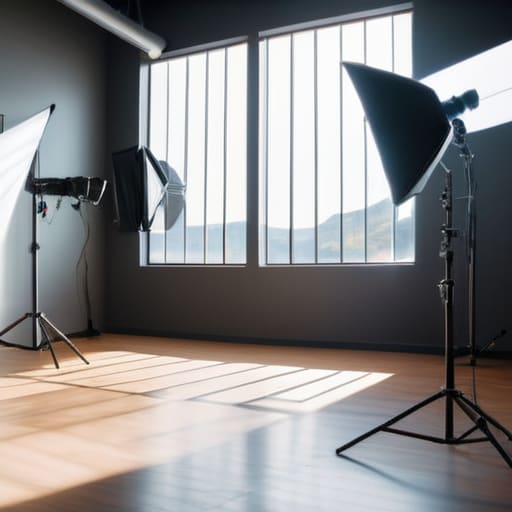
Here is the reality of the situation: your camera’s shutter speed is your only weapon against a window that’s blowing out your subject’s face. When you’re trying to manage the relationship between shutter speed and ambient light, most people think they need more power, but usually, you just need to shut the door on the sun. If you’re shooting in a bright studio, your ambient light is going to try and overpower your strobe. You have to crank that shutter speed up to kill the background brightness, but you’ll quickly hit the ceiling of your camera’s sync speed.
That’s when you start looking at high speed sync photography, which is fine, but it’s a compromise. You lose a massive amount of flash power to get that sync, which means you’re essentially fighting a losing battle with your battery life and your light’s output. I’ve learned it’s much better to just accept the light you have. If the window is too aggressive, don’t try to outrun it with settings; instead, use a heavy curtain or move your subject further from the glass. It’s easier to control a light you’ve intentionally dampened than one that’s screaming through a pane of glass.
Natural Light vs Artificial Light Negotiating With the Sun

The truth is, you aren’t actually “balancing” light; you’re negotiating a truce. When I’m shooting a corporate headshot near a massive floor-to-ceiling window, the sun isn’t your friend—it’s a competitor with a much bigger budget. If you try to match the intensity of direct midday sun with a single speedlight, you’re going to end up with a massive, hot hotspot on your subject’s forehead. Instead of trying to overpower the sun, I usually focus on diffusing flash in sunlight using a medium octa or even a simple silk scrim. It’s about softening the artificial light so it doesn’t look like a surgical lamp hitting them while the background looks like a postcard.
If the sun is particularly aggressive, you might feel the urge to lean into high speed sync photography to kill the ambient light entirely, but be careful. HSS is a lifesaver when you want that creamy, blown-out background, but it eats your battery life and drops your flash power significantly. I’ve learned that sometimes it’s better to just accept a slightly darker room and use a reflector to kick some of that natural light back into the shadows, rather than fighting a losing battle against the physics of a bright afternoon.
Managing Dynamic Range in Photography When the Sky Is Blinding
When you’re shooting a portrait near a massive window and the sky outside is that blinding, milky white, you’re essentially staring down a massive gap in exposure. Your subject’s face is falling into shadow, but if you try to lift that shadow with flash, the window becomes a glowing hole of nothingness. This is where managing dynamic range in photography stops being a theoretical concept and starts being a frantic scramble. You can’t just crank the flash power to infinity; you’ll just end up with a subject who looks like they’ve been hit by a car while the background remains a blown-out mess.
The trick is to stop treating the flash like a spotlight and start treating it like a way to fill the gaps. I usually find myself diffusing flash in sunlight using a small softbox or even just a white umbrella, positioned close to the subject to keep the light wrap soft. If the sun is truly being aggressive, you might have to lean on high speed sync photography to keep your shutter speed high enough to kill that background glare. It’s a compromise, sure—you lose a bit of that natural “feel”—but it’s better than delivering a file where the sky is just a digital scream.
High Speed Sync Photography Making the Camera Obey the Light
Then there is HSS—High Speed Sync photography—which is essentially the “hail mary” of the studio kit. We’ve all been there: you’ve found that perfect, moody window light, but the sun is absolutely screaming through the glass, turning your subject’s skin into a blown-out mess. Normally, you’d be trapped by your camera’s sync speed, forced to choose between a muddy background or a face that looks like it’s glowing from within. But HSS lets you crank that shutter speed up to freeze the motion and kill the excess ambient light, even if it means your battery starts sweating and your flash power takes a massive hit.
The compromise, however, is real. When you engage HSS, you aren’t just clicking a button; you are trading efficiency for control. You’ll find yourself constantly tweaking your exposure compensation for flash because the light behaves differently when the strobe is pulsing rapidly to keep up with the shutter. It’s a delicate dance of managing dynamic range in photography while your gear works twice as hard. It isn’t a magic wand, but it is the only way to stop the sun from winning the argument.
Diffusing Flash in Sunlight and Fixing Your Exposure Compensation
If you’ve managed to tame the shutter speed and ambient light, you’re still going to run into the “harshness” problem. Even if your exposure is technically correct, sunlight hitting a subject’s face while your flash is trying to fill the shadows often results in a look that is far too clinical or, worse, creates those ugly, dark nose shadows that make people feel self-conscious. I’ve found that diffusing flash in sunlight is less about making the light “pretty” and more about making it stop fighting the natural environment. I usually grab a medium octabox—nothing too massive that I’ll trip over in a cramped studio—and place it as close to the subject as the frame allows.
Once the light feels soft enough, you’ll likely realize your meter is lying to you. This is where most people panic and start cranking the flash power until it’s blinding. Don’t do that. Instead, lean on your exposure compensation for flash. If the sun is still blowing out the highlights on their forehead, dial it back in the camera rather than fighting the strobe. It’s a constant negotiation, but once you stop treating the flash and the sun as two separate entities and start treating them as one messy, single light source, the images finally start to breathe.
Five ways to stop the light from winning
- Stop chasing the “perfect” mix. If the window light is too aggressive and your flash can’t keep up, stop trying to balance them perfectly and just pick a side. Sometimes it’s easier to underexpose the background and let the window become a soft, glowing shape rather than fighting a losing battle to keep every detail in the sky.
- Watch your white balance like a hawk. Your camera’s auto setting is going to panic when it sees both a warm lamp and a cool window. Set it manually to something in the middle, or better yet, shoot in RAW and accept that you’ll be spending ten minutes in Lightroom later fixing the skin tones that the mixed light tried to ruin.
- Use a modifier that actually makes sense for the space. If you’re in a cramped studio with a massive window, don’t bring a giant octabox that’s going to catch every bit of stray light. A smaller beauty dish or even a silver reflector can give you more control when the ambient light is already doing half the work.
- Check your subject’s eyes, not just the histogram. You can have a technically “correct” exposure on your screen, but if the daylight is washing out the catchlights in their eyes, the portrait is dead. If the flash isn’t creating that little spark of life against the window light, turn the power up or move your light closer.
- Don’t forget the “hand” check. When you’re obsessing over the light ratios, you’ll forget that your subject is probably stiffening up. While you’re adjusting your flash power for the third time, ask them what they do with their hands when they’re nervous. It breaks the tension and keeps them from looking like a statue while you’re playing with your settings.
The Myth of the Perfect Exposure
Stop trying to find the mathematical middle ground between a window and a strobe; that place doesn’t exist. You aren’t balancing light, you’re negotiating a truce between the sun and your gear, and usually, that means deciding which one you’re going to let win so the subject doesn’t look like a ghost in a cave.
Iwona Krawczyk
The Reality of the Result
At the end of the day, balancing flash and daylight isn’t about finding a perfect mathematical equilibrium; it’s about making a series of educated compromises. You’ve learned to fight the window with your shutter speed, you’ve wrestled with HSS when the sun decided to be aggressive, and you’ve probably spent more time moving a single diffuser than you did adjusting your ISO. We’ve covered the technicalities—the exposure compensation, the dynamic range, the way the room dictates your gear—but remember that none of these settings exist in a vacuum. You aren’t just managing photons; you are managing a chaotic environment that will change the second you click the shutter. If the light shifts or the client moves three feet to the left, your plan has to shift with them.
Don’t let the gear or the light intimidate you into paralysis. I’ve spent years watching people stare at their light meters like they’re reading a holy text, only to miss the moment because they were too busy calculating the ambient fall-off. The gear is just a tool to help you reclaim the scene from the chaos of the room. Once you stop fighting the sun and start negotiating with it, you’ll find that the most beautiful images often come from those messy, unpredictable moments where the light wasn’t quite what you planned. Just keep your eyes on the subject, keep your modifiers ready, and trust your eyes more than your screen.